

What Size Shaped Pillow Do You Actually Need? A Practical Guide to Scale, Proportion, and Placement
You've found the perfect heart-shaped pillow, a gorgeous cloud design, or that moon-shaped cushion you've been eyeing. You click "add to cart," wait eagerly for delivery, and then… it arrives. It's either comically oversized, swallowing your chair, or disappointingly tiny, lost against your sofa like a decorative afterthought.
Shaped pillows aren't like standard rectangular cushions where a simple measurement chart solves everything. A 20-inch star pillow reads completely differently than a 20-inch crescent moon. Complexity of form, negative space, and visual weight all shift how size translates to real-world presence. And unlike sleeping pillows where body dimensions guide your choice, shaped pillows need to work with your furniture proportions, room scale, and the overall visual balance you're trying to create.
This isn't about following a universal rule. It's about understanding the specific relationship between the pillow you want and the space where it will live.
The Furniture Relationship: Your Starting Point
Before you consider room size or style, start with the piece of furniture where your shaped pillow will spend most of its time.
Sofa Proportions
Measure your sofa's seat depth (front to back) and the height of the backrest. For most standard sofas with 20-24 inch seat depths, shaped pillows in the 16-20 inch range create comfortable proportion. But here's where shape complexity matters: a simple round pillow at 18 inches has visual mass. A delicate butterfly at the same measurement has lots of negative space and reads smaller.
If your shaped pillow has intricate cutouts, thin extensions (like star points), or open areas, size up by 2-4 inches from what you'd choose in a solid square cushion. The complexity "eats" visual weight.
For deep sectionals (26+ inch depth), you have more flexibility. Larger shaped pillows (20-24 inches) won't overwhelm because there's physical space to support them. They can lean back without crowding the seating area.
Armchairs and Reading Nooks
Armchairs are trickier. The contained space means a shaped pillow becomes a focal point rather than one element among many. Measure your chair's width between the arms, your shaped pillow should generally be no more than 60-70% of that width, or it will visually "trap" anyone sitting there.
For a standard 30-inch wide armchair, look at shaped pillows in the 14-18 inch range. Go smaller (12-14 inches) if the shape is bold and solid, slightly larger (16-20 inches) if it's delicate or has a vertical orientation.
Bed Styling
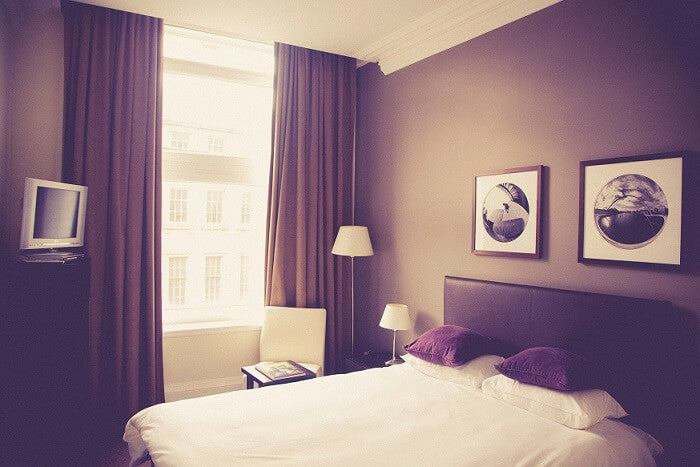
Shaped pillows on beds serve a different purpose, they're decorative accents layered in front of sleeping pillows. Against standard and queen beds, 14-18 inch shaped pillows work well. For king beds with their wider expanse, you can go up to 20-22 inches, or use two smaller shaped pillows (14-16 inches each) for symmetry.
The key: your shaped pillow should never be wider than the sleeping pillow behind it. That creates visual awkwardness and makes the whole arrangement feel unstable.
Room Scale Changes Everything
A shaped pillow that looks perfect in a spacious living room can dominate a small apartment corner. This is about sight lines and visual breathing room.
Small Spaces (Under 150 sq ft)
In compact rooms, your eye takes in everything at once. Oversized shaped pillows, even beautiful ones, can feel cluttered because there's nowhere for the visual complexity to "rest." Stick to the 14-16 inch range for primary shaped pillows, and if you're layering multiples, keep them similarly scaled. Three different-sized shaped pillows in a small space reads as chaos rather than curation.
The exception: if your shaped pillow is your only major decorative element and the color palette is simple, you can go slightly larger (18 inches) because it becomes an intentional focal point rather than competing for attention.
Medium Rooms (150-250 sq ft)
This is your sweet spot for flexibility. You have enough visual distance that shaped pillows in the 16-20 inch range feel proportional without overwhelming. You can also start mixing sizes, a larger shaped pillow (20 inches) paired with smaller solid cushions (14-16 inches) creates layering that feels intentional.
Large, Open Spaces (250+ sq ft)
In spacious rooms with high ceilings or open floor plans, small shaped pillows actually disappear. The visual distance means details get lost. Here, don't be afraid of the 20-24 inch range, especially for shapes with bold, readable silhouettes, clouds, moons, simple hearts.
Intricate shapes with fine details don't scale well to very large sizes anyway. They lose their charm when blown up, and the craftsmanship that makes them special becomes harder to execute well.
Shape Complexity as a Sizing Factor
This is where most sizing guides fail: they treat all pillows like squares. But a 20-inch measurement on a chunky cloud pillow versus a delicate star with five thin points creates completely different visual presence.
High Visual Weight Shapes
Circles, ovals, simple hearts, rainbows, full moons, these shapes are solid and read as substantial. They have minimal negative space, so their stated dimensions translate directly to perceived size. When in doubt with these forms, size down slightly. A 16-inch round shaped pillow on a standard sofa has plenty of presence.
Low Visual Weight Shapes
Stars, crescents, butterflies, leaves with detailed edges, anything with cutouts, these have lots of "air" in their form. A 20-inch star might actually have less fabric surface area than a 16-inch circle. For these, trust the larger end of your size range. That 20-inch star won't feel overwhelming because the points extend into space without creating bulk.
Vertical vs. Horizontal Orientation
A 16x20-inch rectangular pillow feels very different oriented vertically versus horizontally. The same principle applies to shaped pillows. A tall, narrow moon (18 inches high, 12 inches wide) works beautifully on chair backs. A wide, low cloud (12 inches high, 20 inches wide) suits sofa seats better. Consider not just the maximum dimension, but how the shape extends in space.
The Layering Question
Many people buy shaped pillows to layer with existing cushions. This changes your sizing strategy entirely.
If your shaped pillow will be the front layer, the showpiece, it should be smaller than or equal to the cushions behind it, but never dramatically smaller. A 12-inch shaped pillow in front of a 22-inch floor cushion looks like an error. Aim for no more than a 4-6 inch difference between layers.
If you're clustering shaped pillows together without a layered arrangement, vary sizes by 2-4 inches to create visual interest: perhaps an 18-inch cloud paired with a 14-inch star and a 16-inch moon. Too much size variation (mixing 12-inch with 22-inch) feels accidental rather than designed.
Material and Fill Impact Perceived Size
A firmly stuffed shaped pillow appears larger than a softly filled one at identical dimensions. If you want a plush, huggable shaped pillow that compresses when you lean against it, you can size up slightly, the give means it won't feel oversized. If you want a structured decorative piece that holds its form crisply, be conservative with sizing. That firm presence reads larger.
Fabric also matters. High-pile faux fur, chunky knits, or textured materials add visual bulk beyond the pillow's actual dimensions. Smooth cotton, linen, or velvet keeps the stated size truer to the perceived size.
When to Break the Rules
Sometimes you want an oversized shaped pillow, and it works. An enormous cloud pillow on a nursery floor becomes a cozy reading prop. An oversized heart pillow on a teen's bed makes a statement that feels right for the space. A giant star cushion in a playroom invites interaction.
The key: intentionality. When you go deliberately large, let it be the only shaped pillow, or the clear hero piece. Surround it with simpler elements. Give it space to be what it is, a bold choice rather than a miscalculation.
Measuring Before You Buy
Here's your practical action plan:
1. Measure your furniture. Write down seat depth, backrest height, and space between arms for chairs.
2. Consider existing cushions. What sizes do you already have? Are you replacing or layering?
3. Think about shape complexity. Look carefully at product photos. Lots of cutouts or thin extensions? Add 2-4 inches to your initial size instinct. Solid, simple form? You can stay smaller.
4. Visualize with household items. Don't guess what 18 inches looks like. Grab a magazine, book, or cutting board of similar size and place it where the pillow will go. Does it feel right?
5. Check product descriptions for actual dimensions. "Large" means different things to different manufacturers. A 24-inch shaped pillow is genuinely large. A 14-inch is on the smaller side for most adult furniture. Don't rely on size names, get the measurements.
Frequently Asked Questions
Q: Can shaped pillows work as sleeping pillows?
A: Some can, particularly contoured shapes designed for neck support or body pillows in elongated forms. But most decorative shaped pillows are too small or irregularly formed for sleep comfort. If rest is your goal, choose an ergonomically designed shape rather than a decorative one.
Q: Should I match shaped pillow size to my other throw pillows?
A: Not necessarily. Shaped pillows often work best when they're slightly smaller than your standard square or rectangular cushions, creating a layered, curated look. Exact matching can feel too coordinated and stiff.
Q: Do shaped pillows work in minimalist spaces?
A: Absolutely, but stick to simple forms (circles, crescents, ovals) in the smaller-to-medium range (14-18 inches) and limit yourself to one or two. In pared-back spaces, a single well-chosen shaped pillow becomes a sculptural element rather than clutter.
Q: How do I know if a shaped pillow is too big after it arrives?
A: If it prevents comfortable sitting, overlaps significantly with adjacent cushions, or makes the furniture feel crowded when no one's using it, it's too large. You should be able to sit comfortably without relocating the pillow every time.
Finding shaped pillows sized just right for your space matters more than you might think, the difference between "that looks off" and "that's perfect" is often just a few inches. Sandman's Shop's shaped pillow collection includes detailed dimensions for every piece, so you can match scale to your furniture with confidence and finally get that bedroom or living space looking exactly how you pictured it.