
The Hidden Benefits of Oversized Sweaters That Have Nothing to Do With Warmth
You know that oversized sweater you reach for on difficult days? The one that's technically too big, probably a little worn, and definitely not the most fashionable thing in your closet? There's a reason it becomes your default comfort object, and it has surprisingly little to do with temperature.
While warmth is the obvious benefit of an oversized sweater, the real magic happens in the spaces between the obvious. It's in the weight. The drape. The way generous fabric changes how you hold your body and how aware you become of your own boundaries. These aren't small things when you're trying to wind down after a stressful day or create an environment where rest feels possible.
The Weight Factor: Why Heavy Knitwear Calms Your Nervous System
An oversized sweater, particularly one in chunky knit construction, carries considerably more fabric weight than a fitted garment. This isn't a design flaw, it's a feature that affects your body in measurable ways.
The gentle, distributed pressure of a heavy knit sweater mimics the principle behind weighted blankets: deep pressure stimulation. When fabric rests against your shoulders, arms, and torso with consistent, gentle weight, it provides proprioceptive input, your body's sense of where it is in space. This type of sensory feedback has a regulating effect on the nervous system.
You're not imagining the calming effect of pulling on your favorite chunky cardigan. The weight matters. It grounds you. People who struggle with anxiety, overstimulation, or difficulty transitioning from "on" mode to "off" mode often instinctively reach for heavier garments because their bodies are seeking that regulatory input.
How Much Weight Makes a Difference?
The specific weight threshold varies by individual, but most people report noticing the calming effect when a sweater adds between 1.5 to 3 pounds of evenly distributed weight. Oversized construction distributes this across a larger surface area than fitted clothing, which means the pressure feels gentle rather than constricting.
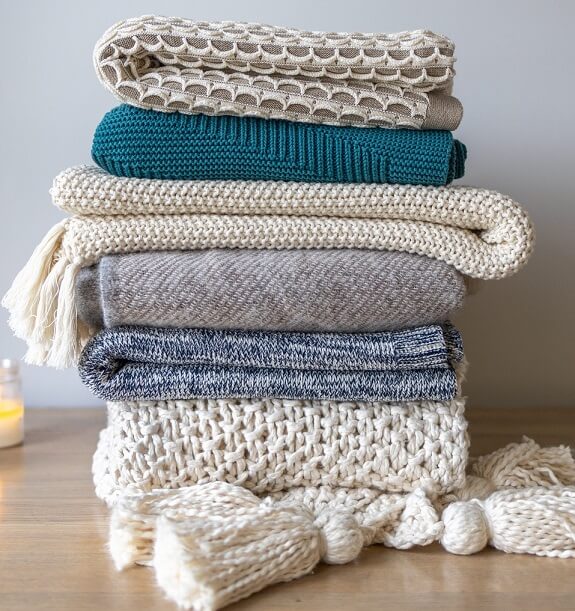
Chunky cable knits, bouclé textures, and multi-ply wool sweaters typically fall into this range when sized generously. Thin cotton or synthetic knits, even when oversized, don't provide the same effect because they lack sufficient mass.
The Drape Effect: Loose Silhouettes and Body Awareness
The way an oversized sweater moves with you, or more accurately, doesn't cling to you, changes your relationship with your own body throughout the day.
Tight or fitted clothing creates constant sensory input. Your nervous system receives continuous feedback about restriction, shape, and boundary. For some people, this sensation becomes background noise. For others, especially those with sensory sensitivities or body-focused anxiety, it's exhausting.
The generous silhouette of an oversized sweater creates breathing room, not just for air circulation, but for your nervous system. You're less aware of your clothing, which paradoxically means you can be more comfortably aware of yourself. There's no waistband cutting in. No sleeves pulling at your shoulders. No fabric tension reminding you to hold your stomach in or maintain a particular posture.
This matters for rest. When your body receives fewer signals that it needs to maintain, perform, or present a particular way, it becomes easier to access the physiological state necessary for genuine relaxation.
Texture and Temperature Regulation: The Underrated Comfort Duo
Here's where oversized sweaters deliver something genuinely different from other comfort clothing: the combination of substantial texture and built-in temperature flexibility.
Natural fiber sweaters in oversized silhouettes trap air between the yarn fibers and between your body and the fabric. This creates microclimate zones that adjust based on your activity level and body temperature. When you're cold, these air pockets insulate. When you warm up, the loose fit allows heat and moisture to escape without requiring you to remove the garment entirely.
This temperature modulation matters more than most people realize for comfort and rest. One of the reasons you feel so comfortable in your favorite oversized sweater isn't just warmth, it's that you maintain a consistent, comfortable temperature without the cycle of overheating and cooling down that happens with fitted or synthetic layers.
The Texture Component
The physical texture of knit sweaters also provides sensory satisfaction that smooth fabrics can't match. Cables, ribs, seed stitch, and other dimensional knit patterns give your hands something to do and your nervous system gentle, varied input when you run your fingers across the surface or gather the fabric in your hands.
This is self-soothing behavior, and it's entirely normal. The textured surface of quality knitwear supports these small regulatory actions in a way that feels natural rather than obvious.
The Ritual of Putting It On: Transition Objects for Adults
There's a reason you reach for a specific oversized sweater when you get home from work, when you're feeling overwhelmed, or when you're settling in for the evening. It functions as a transition object, a physical marker that helps your nervous system shift gears.
Adults need transition rituals just as much as children do, but we're less obvious about them. The act of pulling on an oversized sweater, feeling the weight settle onto your shoulders, the sleeves fall past your wrists, the hem drop to mid-thigh, becomes a bodily signal that you're moving from one mode to another. From work to home. From performance to rest. From vigilance to safety.
The oversized nature of the garment amplifies this effect. You're not just putting on clothing; you're enveloping yourself. The generous dimensions create a clear before-and-after in how you physically take up space, and your nervous system reads this change.
Why Oversized Specifically Matters for Evening Wind-Down
While any comfortable sweater can feel good, the oversized silhouette offers specific advantages for the hours before sleep.
Restrictive clothing in the evening maintains a state of subtle activation. Your body doesn't fully relax when it's receiving constant feedback about boundaries, pressure points, and restricted movement. Loose, generous clothing removes these signals.
An oversized sweater also accommodates the natural fluctuations in body temperature that happen as you approach sleep. Your core temperature needs to drop slightly for sleep onset to occur smoothly. Clothing that's too fitted or insulating can interfere with this process. The combination of natural fibers and loose construction allows your body to thermoregulate without requiring you to constantly adjust layers.
Perhaps most importantly, oversized sweaters accommodate rest positions. You can curl up on the couch, pull your knees to your chest, wrap your arms around yourself, or shift into any position that feels comfortable without your clothing pulling, binding, or requiring adjustment. This freedom of movement supports the physical restlessness that often accompanies the wind-down process.
The Practical Comfort Benefits No One Talks About
Beyond the physiological and psychological effects, oversized sweaters deliver practical comfort advantages:
They accommodate layers without bulk. You can wear them over pajamas, tank tops, or thermal layers without creating uncomfortable bunching or restriction. This versatility means one piece can serve multiple comfort needs across different temperatures.
They create portable comfort zones. Unlike blankets, which restrict movement, an oversized sweater travels with you. You can move from room to room, answer the door, or step outside without losing your comfort layer.
They provide coverage without constriction. For people who feel more comfortable with more coverage, whether for temperature, body image, or sensory reasons, oversized sweaters deliver coverage that feels protective rather than restrictive.
They age into greater comfort. Natural fiber sweaters become softer, more drapey, and more comfortable with wear and washing. Your favorite oversized sweater often becomes more valuable over time rather than less.
What to Look for in an Oversized Sweater for Maximum Comfort Benefits
If you're specifically seeking the comfort and rest-supporting benefits of an oversized sweater rather than just the aesthetic, certain features matter more than others:
Fiber content: Natural fibers (wool, cotton, cashmere, alpaca) regulate temperature and provide textural satisfaction that synthetics can't match. Merino wool offers softness without itch. Cotton blends wash easily. Cashmere blends deliver luxury at accessible price points.
Weight and construction: Look for substantial knit construction, chunky gauges, cable patterns, or multi-ply yarns. The sweater should feel like it has presence when you pick it up.
True oversized proportions: You want drop shoulders (where the shoulder seam falls past your natural shoulder line), extended length (ideally to mid-thigh or longer), and sleeves that extend past your wrists. These proportions create the enveloping effect that supports the comfort benefits.
Quality finishing: Look for rolled or ribbed edges that won't curl or lose shape, and seams that will hold up to the pulling, gathering, and movement that comes with using a sweater as a comfort object rather than just clothing.
Frequently Asked Questions
Q: Is there a difference between oversized sweaters and regular sweaters sized up?
A: Yes, significantly. Oversized sweaters are designed with intentional proportions, longer bodies, dropped shoulders, and extended sleeves that create a specific silhouette. Simply sizing up a regular sweater often results in awkward proportions where some areas are too big while others still feel restrictive. True oversized pieces are cut to drape and move in ways that support the comfort benefits described here.
Q: Can an oversized sweater actually help with anxiety or sleep problems?
A: While an oversized sweater isn't a treatment for clinical anxiety or sleep disorders, the sensory input it provides, can support your body's natural calming mechanisms. Many people find that consistent comfort rituals, including specific clothing choices for evening hours, help signal their nervous system that it's time to shift toward rest. It's one tool in a larger approach to better rest and regulation.
Q: How do I care for an oversized sweater so it maintains its comfort properties?
A: Natural fiber sweaters maintain their comfort best when washed gently in cool water with wool-safe detergent, then laid flat to dry. This preserves the fiber structure and prevents the stretching or shrinking that damages the proportions and drape. Fold rather than hang oversized knits to prevent shoulder distortion. The goal is maintaining the weight, texture, and silhouette that deliver the comfort benefits.
If you're looking for that settle-in-for-the-evening feeling, Sandman's Shop's collection of oversized sweaters includes pieces specifically selected for their weight, texture, and rest-supporting qualities, not just their warmth.