


How to Style a Blanket on a Bed So It Looks Intentional (Not Just Thrown On)
Your bedroom probably looks fine. The bed is made, the pillows are arranged, everything's tidy. But something feels flat. Nine times out of ten, it's the blanket.
Most of us either fold our blankets exactly the same way every single day, that predictable horizontal thirds situation, or we leave them crumpled at the foot of the bed like laundry that hasn't found its home yet. Neither approach makes the bed feel considered. And when your bed doesn't feel considered, your whole bedroom reads as an afterthought.
The good news: styling a blanket well takes about thirty seconds longer than styling it badly. You just need to know what you're aiming for, and which technique works with the blanket you actually own.
Why Blanket Styling Matters More Than You Think
A blanket is the largest single element on your bed that *isn't* structural. Your sheets are tucked. Your duvet or comforter follows the shape of the mattress. But your blanket gets to move. It's the only layer with visual flexibility, which makes it the easiest way to shift how the whole bed reads.
When a blanket looks deliberate, it signals that the room is cared for without being fussy. It adds texture, breaks up flat expanses of bedding, and introduces asymmetry in a space that's otherwise dominated by rectangles. That contrast between structure and softness is what makes a bed feel inviting rather than hotel-sterile.
The styling also affects how you interact with the space. A blanket that looks good draped over one corner is easier to grab at night than one folded into a tight rectangle at the foot of the bed. A blanket styled across the lower third invites you to sit on the edge of the mattress. These aren't just visual choices, they're functional ones.
The Seven Blanket Styling Techniques That Actually Work
Let's get specific. Here are the approaches that look intentional, with guidance on which blankets suit each style.
1. The Diagonal Drape
Fold your blanket lengthwise (once or twice depending on size), then drape it diagonally from one top corner of the bed down toward the opposite bottom corner. Let it fall naturally rather than smoothing it flat.
Best for: Lightweight blankets with good drape, cotton waffle weaves, linen, bamboo blends. Avoid with stiff or heavily textured fabrics that won't flow.
Why it works: The diagonal line breaks the rigid horizontal/vertical grid of the bed. It feels casual but not careless, and it's easy to pull up when you're cold.
2. The Asymmetric Corner Fold
Fold the blanket in half or thirds, then place it across just one side of the bed, either draped over a bottom corner or laid lengthwise along one edge. The asymmetry is key.
Best for: Medium-weight blankets in solid colors or subtle patterns. Chunky knits look particularly good here because the texture becomes a focal point.
Why it works: Asymmetry always reads as more considered than symmetry. It suggests someone made a choice rather than following a default pattern.
3. The Loose Foot-of-Bed Fold
Instead of folding your blanket into tight, crisp thirds, fold it loosely and scrunch it slightly as you lay it across the foot of the bed. Let it bunch and wrinkle naturally.
Best for: Any blanket, but especially good for restoring life to a styling approach that's become boring. The loose fold softens heavier blankets like fleece or sherpa that can look blocky when folded precisely.
Why it works: The texture variation adds depth. A perfectly smooth fold can look rigid; a loose one looks livable.
4. The Layered Reveal
If you sleep with multiple blankets or a duvet plus a blanket, fold the top blanket down to reveal a few inches of the layer beneath. The contrast in color or texture becomes part of the styling.
Best for: Blankets with interesting backing or trim, or situations where you're layering two textures (smooth duvet with chunky knit blanket, for example).
Why it works: Layering adds dimension. It also makes the bed look more substantial and inviting without adding actual bulk.
5. The Casual Side Tumble
Fold your blanket loosely, place it near one side of the bed at about mid-mattress height, and let part of it tumble off the edge naturally.
Best for: Larger throws and lighter blankets that will drape rather than stick straight out from the bed edge. Avoid with weighted blankets, they'll pull the whole thing onto the floor.
Why it works: It looks unposed, like you just got up from reading. The trick is to make it look accidental on purpose, which means adjusting it a few times until the drape hits right.
6. The Woven Tuck
Fold your blanket lengthwise into a runner, then lay it across the bed at an angle or horizontally. Tuck one end slightly under a pillow or under the edge of your duvet.
Best for: Medium to lightweight blankets. The tuck works best when there's a color or texture contrast between the blanket and what it's tucked into.
Why it works: The tuck anchors the styling and prevents the blanket from looking like it's sliding off. It also creates a deliberate connection between elements.
7. The Sculptural Puddle
This is for maximalists. Fold your blanket loosely, place it anywhere on the bed, then manipulate it into a soft, gathered shape, almost like you've bunched fabric for a still-life painting.
Best for: Oversized blankets with beautiful drape, linen, velvet, or high-quality cotton. This doesn't work with stiff or synthetic materials.
Why it works: It's the most overtly styled option, but it photographs beautifully and makes a statement. Use this when you want the bed to look curated.
How Texture and Weight Change Everything
Here's what most styling guides miss: the same folding technique will look completely different depending on your blanket's texture and weight.
A chunky cable-knit blanket folded diagonally looks cozy and substantial. A lightweight cotton waffle blanket folded the same way looks breezy and casual. A heavy fleece blanket folded diagonally might look bulky and awkward because the fabric doesn't drape, it stacks.
Stiff or structured blankets (fleece, some quilts, heavily woven cotton) work best with simpler styling: foot-of-bed folds or asymmetric placements where you're not asking the fabric to flow.
Drapey blankets (linen, bamboo, lightweight knits, velvet) can handle more complex arrangements. They'll puddle, tumble, and gather without looking forced.
Weighted blankets need to be styled minimally. They don't drape well, and their heft means they'll slide off angled placements. Fold them neatly or leave them flat, trying to force a weighted blanket into a casual tumble will just look like a failed attempt.
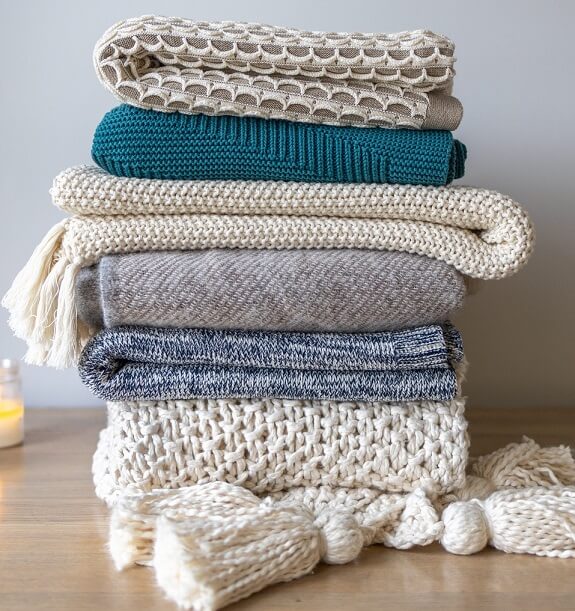
Textured blankets (cable knit, waffle weave, chenille) are the easiest to style well because the texture does half the visual work. Even a simple fold looks interesting when the surface catches light differently.
The Most Common Blanket Styling Mistakes
Folding Too Small
When you fold a blanket into a tiny, tight rectangle, it disappears visually. It looks like you're trying to hide it rather than style it. If your folded blanket is smaller than a throw pillow, you've gone too far.
Perfect Symmetry Every Time
Centering a blanket horizontally across the exact middle of the bed, folded into exact thirds, will always look default. Not bad, just invisible. If you've been doing this for months, your eye has tuned it out.
Ignoring Color Contrast
If your blanket is nearly the same color as your duvet or sheets, styling becomes much harder. There's no visual separation. Either introduce contrast through color or make sure the texture is different enough to register from the doorway.
Fighting the Fabric
Trying to make a stiff blanket drape, or forcing a drapey blanket to hold a crisp fold, creates visual tension. Work with what the material wants to do.
Over-Styling
If you spend more than two minutes arranging a blanket, you've entered decorative territory and left "livable bedroom" behind. The best styling looks like it took no time at all.
Styling for Different Bed Sizes and Frames
The same blanket will style differently depending on your bed's proportions.
On a queen or king bed, you have enough real estate to use diagonal drapes, side tumbles, and asymmetric placements without the blanket overwhelming the space. Go for larger folds and more dramatic angles.
On a full or twin bed, stick with simpler styling, foot-of-bed folds or subtle corner drapes. Diagonal placements can look forced when the bed is narrower.
With a low-profile platform bed, blankets that drape over the edge look particularly good because they add vertical interest and soften the bed's lines.
With a tall bed or one with a footboard, foot-of-bed folds work beautifully, but side tumbles can get awkward. Focus on arrangements that stay within the mattress boundaries.
When to Restyle (and When to Leave It)
You don't need to rearrange your blanket every single day. But changing the styling occasionally keeps your bedroom from feeling stale.
Restyle when:
- You're shifting to seasonal bedding
- You've had the same fold for more than a month
- You're photographing the room or having guests
- The current arrangement has become sloppy through daily use
Leave it when:
- It still looks good and you're not bored of it yet
- You're prioritizing speed in the morning (a quick messy fold is fine)
- You've found a style that genuinely works with your routine
The goal isn't Instagram perfection every morning. It's finding two or three approaches that look deliberate *and* fit your actual life.
Frequently Asked Questions
Q: Should I style my blanket if I'm just going to mess it up at night?
A: Yes, for the same reason you make your bed even though you'll unmake it later. A styled blanket changes how the room feels during waking hours, and it takes less than a minute. Think of it as the visual equivalent of putting on real clothes instead of staying in pajamas all day.
Q: How do I keep a styled blanket from sliding off the bed?
A: Use weight and friction to your advantage. Tuck one end slightly under a pillow or the edge of your duvet. Avoid styling slippery fabrics (like satin-backed blankets) on slippery bedding (like percale sheets). And if you're draping a blanket over the edge, make sure at least two-thirds of its weight stays on the mattress.
Q: Can I style a weighted blanket the same way as a regular throw?
A: Not really. Weighted blankets don't drape well because of their construction, the weight is distributed in pockets, which creates stiffness. Your best options are a simple horizontal fold at the foot of the bed or laying it flat as a base layer with a lighter blanket styled on top.
Q: What if my blanket keeps looking messy no matter how I fold it?
A: Some blankets just don't photograph well but feel perfect in person. Fleece, for example, often looks rumpled even when freshly arranged, but it's cozy as hell. If you love how it feels, keep it. Styling is about making *your* bedroom feel better, not performing for an audience.
If you're ready to find a blanket that actually works with how you want your bed to look, something with the right weight, drape, and texture for your space, explore Sandman's Shop's blanket collection. We've chosen every option for how it feels *and* how it lives in a real bedroom.