

The Best Novelty Pillow Guide: How to Choose One That Adds Personality Without Derailing Your Space
Novelty pillows occupy a curious space in the home. They're playful, personal, and one of the lowest-commitment ways to inject personality into a room. But they're also the easiest decorative element to get wrong; tipping a thoughtfully designed bedroom from inviting to visually chaotic, or worse, undermining the calm your sleep space needs.
The stakes here aren't trivial. Your bedroom should be a sanctuary, and visual clutter has a measurable impact on how your nervous system settles at the end of the day. A novelty pillow can be a point of joy; a conversation piece, a mood lifter, something that makes your space feel genuinely yours. But the wrong choice, placed without intention, creates the opposite effect.
This guide is for anyone who wants to add character without compromising comfort or calm. We'll walk through the specific decisions that separate charming from cluttered: scale relative to your furniture, how many is genuinely too many, which subjects and shapes work where, and how to anchor a novelty piece in a space that still feels cohesive.
Why Novelty Pillows Work (When They Work)
The appeal of a novelty pillow is immediate. Whether it's shaped like a croissant, screen-printed with a witty phrase, or rendered as an oversized avocado, these pieces offer low-cost, high-impact personality. Unlike wall art or furniture, they're easy to swap out seasonally or when your taste shifts.
When done well, a novelty pillow becomes an intentional accent; something that reflects your sense of humor, interests, or aesthetic without demanding the whole room revolve around it. The key is treating it as you would any other design choice: with consideration for context, scale, and quantity.
Scale: Matching Pillow Size to Furniture and Room Proportions
One of the most common missteps with novelty pillows is choosing a size that's out of proportion with the furniture it's sitting on. A massive 3D taco pillow might look whimsical in a product photo, but placed on a small loveseat or twin bed, it dominates the space and reads as cartoonish rather than charming.
For sofas and sectionals: Novelty pillows work best when they're roughly the same size as your other throw pillows, typically 18 to 22 inches. If the novelty piece is larger (say, an oversized shaped pillow), limit it to one, and balance it with smaller, simpler cushions in complementary tones.
For beds: Queen and king beds can handle a single statement novelty pillow (around 20 to 24 inches) layered in front of standard sleeping pillows or shams. On a twin or full bed, go smaller, 16 to 18 inches, or the novelty piece will crowd out functional pillows.
For accent chairs: Stick to one novelty pillow per chair, sized at 16 to 20 inches. Anything larger overwhelms the seat and makes the chair look unusable.
If you're choosing a shaped pillow (a cloud, a dinosaur, a slice of pizza), consider its visual weight, not just its measurements. A fluffy, textured shape can read as larger than a flat, printed square of the same dimensions.
Quantity: How Many Novelty Pillows Is Too Many?
This is where intention separates personality from chaos. The rule isn't rigid, but it's worth internalizing: one novelty pillow per furniture grouping is almost always the right answer.
If you have a bed with six decorative pillows, one can be novelty. If you have a sofa with four throw pillows, one can break the mold. If you layer two or more novelty pieces in the same visual field, they start competing for attention, and the effect becomes cluttered rather than curated.
There's an exception: if you're deliberately creating a maximalist or eclectic space, multiple novelty pillows can work, but they need a unifying thread. Same color palette, similar subject matter (all food-shaped, all typography, all vintage-inspired), or consistent material (all velvet, all embroidered). Without that thread, the collection looks accidental.
Subject and Shape: What Works Where
Not all novelty pillows are created equal, and context matters. A pillow shaped like a giant sequined emoji might be perfect in a teen's bedroom but feel jarring in a guest room meant to evoke calm. Here's how to match subject and shape to space:
Abstract or geometric novelty: These work almost anywhere. Think pillows with unexpected textures (faux fur, chunky knit, velvet patchwork) or subtle pattern play (oversized polka dots, color-blocked stripes). They add interest without narrative baggage.
Typography and phrases: Best in personal spaces; your own bedroom, a reading nook, a home office. Guest rooms and living rooms shared with others benefit from less literal messaging. If you do choose a phrase, make sure it's something you'll want to read daily for the next year, not a trendy quip that'll feel stale in three months.
Shaped pillows (food, animals, objects): These are inherently playful, so they need a space that can hold that energy. They work beautifully in kids' rooms, casual family spaces, or a bedroom where you've intentionally leaned into a lighthearted vibe. In a minimalist or serene space, they disrupt rather than enhance.
Seasonal or thematic: Novelty pillows are one of the easiest ways to rotate décor seasonally. A knit snowflake pillow in winter, a embroidered lemon in summer. Just store them thoughtfully between seasons so they stay fresh.
Anchoring a Novelty Pillow in a Cohesive Space
The difference between a novelty pillow that feels considered and one that feels random comes down to anchoring. Here's how to integrate one intentionally:
Pull a color from the room: If your novelty pillow is patterned or multicolored, make sure at least one of its hues appears elsewhere in the space; in a throw blanket, wall art, or rug. This creates visual continuity.
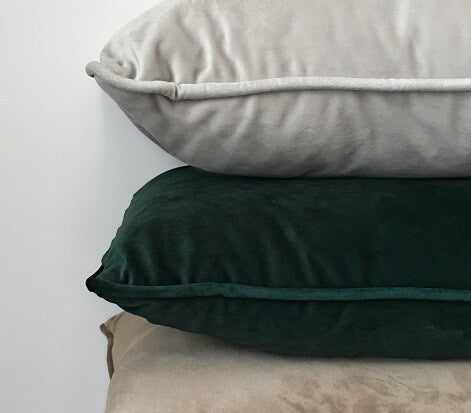
Balance with neutrals: Pair your novelty piece with simpler, solid-colored pillows in complementary or neutral tones. This gives the eye a place to rest and prevents the arrangement from feeling busy.
Consider texture, not just image: A novelty pillow with interesting texture (tufted, embroidered, faux fur) can add personality without relying solely on a bold graphic or shape. These tend to age better and integrate more seamlessly.
Align with the room's mood: If your bedroom is designed to be a calming retreat, choose novelty pillows that lean subtle; maybe a soft, hand-painted moon or a muted watercolor print. If your space is energetic and colorful, you have more latitude for bold shapes and saturated hues.
What to Avoid
Overly literal themes in adult bedrooms: A pillow shaped like a slice of pizza is fun. Five food-shaped pillows on one bed is a dorm room, not a designed space.
Clashing novelty styles: Mixing a glittery sequined pillow with a rustic burlap-printed one and a sleek geometric piece creates visual noise. Novelty pillows should complement, not compete.
Ignoring fill quality: A novelty pillow is still a pillow. If it's lumpy, flat, or poorly constructed, it won't feel good to lean against, and that matters in a sleep space. Look for well-filled inserts and durable covers, even if the design is whimsical.
Forgetting washability: Decorative pillows collect dust and body oils, especially in bedrooms. Choose novelty pillows with removable, washable covers whenever possible.
Making the Decision
Before you add a novelty pillow to your cart, ask yourself three questions:
1. Does this enhance the mood I want in this room, or does it distract from it?
2. Is the scale appropriate for the furniture it's going on?
3. Can I name at least one other element in the room that this pillow visually connects to?
If you can answer yes to all three, you've found a piece that adds personality with intention.
Frequently Asked Questions
Q: Can I use novelty pillows in a guest bedroom?
A: Absolutely, but choose thoughtfully. Avoid overly personal or polarizing messaging (political slogans, inside jokes) and lean toward universally appealing designs — soft textures, subtle patterns, or gentle shapes. A single well-chosen novelty pillow can make a guest room feel welcoming rather than generic.
Q: How do I store novelty pillows when I'm not using them?
A: Keep them in a cool, dry place away from direct sunlight to prevent fading. Use breathable fabric storage bags rather than plastic bins, which can trap moisture and cause mildew. Fluff them occasionally to help them hold their shape.
Q: Are novelty pillows appropriate for minimalist spaces?
A: Yes, but choose carefully. Stick to one subtle novelty piece; perhaps something with interesting texture or a monochromatic design element. Avoid bold graphics or 3D shapes, which will feel visually heavy in a pared-down space.
Q: Should novelty pillows be as comfortable as functional throw pillows?
A: Ideally, yes. Even if a pillow is primarily decorative, it should still be pleasant to lean against. Avoid pillows with hard embellishments (large buttons, stiff appliqués) if they'll be used on seating or beds. Comfort and personality don't have to be mutually exclusive.
If you're looking for novelty pillows that balance personality with quality construction, Sandman's Shop's curated collection offers options designed to add character without compromising the comfort your sleep space deserves.