



Can a Chunky Knit Blanket Actually Help You Sleep Better?
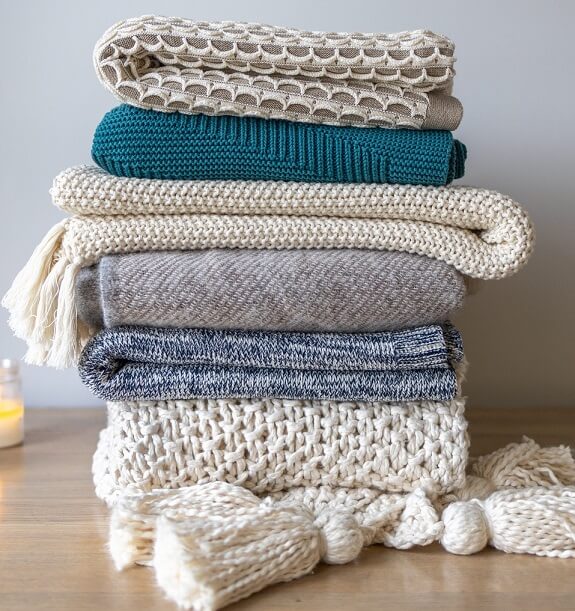
You've seen them everywhere, those Instagram-perfect chunky knit blankets draped over beds and sofas, their oversized loops creating a texture so inviting you want to reach through the screen. But beyond their undeniable aesthetic appeal, something interesting keeps coming up in user reviews: people report sleeping better under them.
Not just feeling cozier. Actually sleeping better.
This isn't about weighted blankets in the clinical sense, and it's not just about warmth. Something specific happens when you sleep under a blanket with substantial texture and moderate weight, something that falls into a fascinating middle ground between standard bedding and therapeutic sleep tools.
Let's look at what's actually going on.
The Weight Factor: Heavier Than It Looks, Lighter Than a Weighted Blanket
A quality chunky knit blanket typically weighs between 4-8 pounds, depending on size and yarn density. That's considerably heavier than a standard cotton blanket (usually 2-3 pounds), but lighter than the 15-25 pound range recommended for therapeutic weighted blankets.
This middle weight creates what some users describe as "presence without pressure" , enough substance that you feel covered and contained, but not so much that you feel pinned down.
The weight distributes differently too. Because of the open knit structure, a chunky blanket doesn't lie flat against your body the way a traditional weighted blanket does. Instead, the chunky loops create small pockets of air while still providing gentle, irregular pressure points where the yarn touches your skin or pajamas.
Why This Matters for Restless Sleepers
If you're someone who shifts positions frequently during the night, a traditional weighted blanket can become a problem. Many users report that while weighted blankets help them fall asleep, they wake up hot and tangled, or they find the weight restrictive when they need to roll over.
The chunky knit structure allows for more movement while maintaining that sense of being "held." The blanket moves with you rather than anchoring you in place. For restless sleepers who need the comfort of weight but also the freedom to shift, this difference is significant.
Texture and Tactile Comfort: More Than Aesthetics
Here's something most articles about chunky blankets don't address: the texture itself appears to play a role in how people settle down for sleep.
The pronounced loops and gaps create what sleep environment specialists call "tactile interest" your hands and fingers can interact with the texture, giving your mind something benign to focus on during those restless minutes before sleep.
This isn't scientifically proven in the way deep pressure stimulation has been studied, but the anecdotal evidence is remarkably consistent. Users describe "fidgeting with the loops" or "running their fingers through the gaps" as part of their wind-down routine. For people whose minds race at bedtime, this kind of gentle, repetitive tactile engagement can serve as a form of self-soothing.
The Temperature Question Nobody Answers Honestly
Let's be direct: chunky knit blankets are warm. The thick yarn (usually chenille, merino wool, or cotton) combined with the air pockets in the knit structure creates substantial insulation.
This is wonderful if you're a cold sleeper, if your bedroom runs cool, or if you're using it in fall and winter. It's less ideal if you're someone who overheats at night or you're trying to use it in the summer.
Unlike some marketing might suggest, the "breathability" of a chunky knit blanket is relative. Yes, there are gaps in the knit, but the yarn itself is dense. Most people find these blankets too warm for year-round use.
The honest assessment: if temperature regulation is your primary sleep issue, a chunky blanket isn't the solution. But if you're someone who struggles to feel cozy enough to relax, and cold extremities keep you from settling, the warmth combined with the weight might be exactly what helps you transition into sleep.
How Chunky Blankets Differ From Weighted Blankets
This distinction matters because the two products serve different purposes, despite some overlap.
Weighted blankets use glass beads or plastic pellets sewn into compartments to create even, distributed pressure across your body. They're designed based on deep pressure stimulation research, which suggests that 10% of your body weight in evenly distributed pressure can help reduce anxiety and improve sleep quality.
Chunky knit blankets achieve weight through the yarn itself, no beads or filling. The weight is less evenly distributed, concentrated in the yarn rather than spread uniformly. They're not typically heavy enough to qualify as therapeutic weighted blankets.
The practical difference shows up in use:
- Weighted blankets tend to stay in place better but can feel restrictive
- Chunky blankets move more easily but may slide off the bed
- Weighted blankets trap more heat due to the fill material and dense stitching
- Chunky blankets have air circulation through the knit but warm yarn
- Weighted blankets have minimal texture on the surface
- Chunky blankets provide significant tactile engagement
Neither is universally better. They're designed for different comfort needs.
The "Cocooning" Effect: Why Physical Boundaries Help Some Sleepers
There's a reason weighted blankets, compression sheets, and even swaddling for adults have found a market: some people sleep better when they feel physically contained.
Chunky blankets create a version of this boundary feeling, but with more visual and tactile emphasis. The thick loops create a clear, visible perimeter around your body. You can see where you are under the blanket, which sounds trivial but appears to contribute to that feeling of having created a safe, defined sleep space.
For people with anxiety, this gentle physical boundary can help signal to your nervous system that you're in a protected environment. It's not a clinical intervention, but it's also not nothing.
What the Materials Actually Do
Not all chunky blankets are created equal, and the yarn composition significantly affects both the feel and the sleep experience.
Chenille is the most popular option: it's soft, has a slight weight to it, and creates those photo-perfect chunky loops. It tends to be warm and holds its shape well. However, chenille can pill over time and may feel too plush for some sleepers.
Cotton chunky knits are cooler and more breathable than chenille, though still warm compared to standard bedding. They have a more natural, less velvety texture. Cotton also tends to be more durable with washing.
Merino wool offers the best temperature regulation: it warms when you're cold but wicks moisture when you're warm. It's also the most expensive and requires more careful maintenance. True merino chunky blankets are relatively rare because of the cost.
Acrylic and polyester blends are budget-friendly and come in the widest color range, but they trap the most heat and don't breathe well. If you tend to overheat, avoid synthetic chunky blankets entirely.
Who Actually Benefits From Sleeping With a Chunky Blanket?
Based on user reports and the properties we've discussed, chunky blankets seem to help:
- Cold sleepers who need substantial warmth to feel comfortable enough to relax
- Tactile seekers who benefit from textural engagement when winding down
- Restless movers who want some weight but need freedom to shift positions
- Anxious sleepers who find comfort in physical boundaries but find full weighted blankets too restrictive
- Aesthetic-conscious sleepers who genuinely rest better in spaces that feel intentionally cozy
They're less ideal for:
- Hot sleepers or anyone with night sweats
- People who need clinical-level deep pressure (go for a proper weighted blanket instead)
- Anyone who wants low-maintenance bedding (chunky blankets require hand-washing or delicate cycles)
- Sleepers with pets who knead or dig at blankets (those claws will snag the loops)
The Real Verdict: Context-Dependent Comfort
Here's the honest answer to whether a chunky blanket can help you sleep better: it depends entirely on what's currently keeping you from sleeping well.
If your issue is temperature regulation, circadian rhythm problems, or clinical insomnia, a chunky blanket won't solve it. These are specialized sleep issues that require targeted interventions.
But if your struggle is about settling down, if you have trouble feeling cozy enough, calm enough, or contained enough to transition into sleep, then the specific combination of moderate weight, pronounced texture, and substantial warmth that a chunky blanket provides might genuinely help.
It's not a medical device. It's a comfort tool. And for the right person in the right context, that comfort directly translates to better sleep.
The test is simple: if you've ever felt more relaxed after wrapping yourself in a heavy, textured throw while reading or watching TV, a chunky blanket might provide that same settling effect when you're trying to sleep.
Frequently Asked Questions
Q: Can I use a chunky knit blanket as a weighted blanket?
A: Not quite. While chunky blankets have more weight than standard blankets, they typically don't meet the clinical weight recommendations (10% of body weight) that therapeutic weighted blankets follow. They offer moderate weight and texture comfort rather than deep pressure stimulation. If you specifically need weighted blanket therapy for anxiety or sensory issues, choose a proper weighted blanket instead.
Q: Will a chunky blanket make me too hot at night?
A: Probably, if you already tend to overheat during sleep. The thick yarn and air-trapping knit structure create substantial insulation. They're best suited for cold sleepers, cool bedrooms, or seasonal use in fall and winter. If temperature regulation is your primary sleep issue, look for cooling bedding options instead.
Q: How do I wash a chunky knit blanket without ruining it?
A: Hand washing in cold water is safest, though high-quality cotton or chenille chunky blankets can usually handle a delicate machine cycle in a mesh bag. Always air dry flat, never put them in the dryer. The weight of wet yarn can stretch the blanket, so support it fully when moving it. Expect more maintenance than standard bedding.
Q: Do chunky blankets stay in place on the bed?
A: They tend to move more than flat blankets because of the textured surface and the way the loops interact with sheets. Many users keep chunky blankets as top layers or use them over a duvet rather than as the primary blanket. The substantial weight helps some, but they're not as anchored as tightly woven blankets.
If you're curious whether the weight and texture of a chunky blanket might help you settle into sleep more easily, our collection includes options in different materials and weights to match your specific comfort needs. Find your fit at Sandman's Shop, where better rest starts with understanding what actually works for you.