



What Using a Chunky Blanket for Sleep Taught Me About What I Actually Need From Bedding
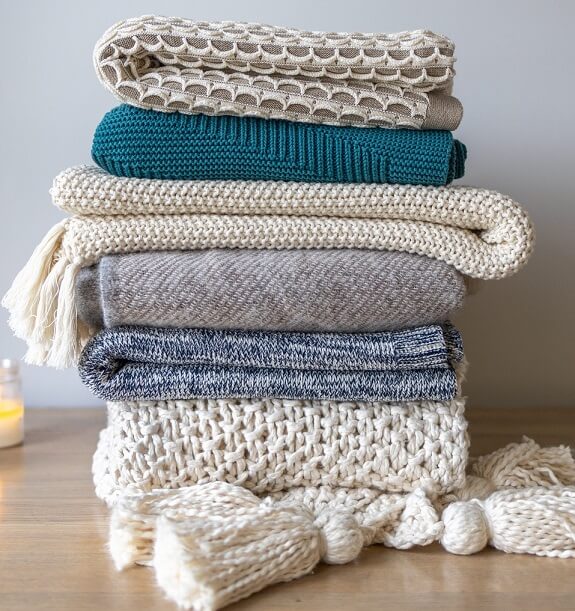
I bought my first chunky knit blanket because it looked cozy draped over the foot of my bed. The Instagram-worthy texture, the inviting loops of soft yarn, it was meant to be decorative. A prop for Sunday morning coffee photos, maybe something to pull over my lap while reading.
I didn't expect it to change how I actually sleep.
The first night I used it as my main blanket instead of my regular duvet was almost accidental. It was one of those in-between nights; too warm for my winter comforter, but I still wanted weight and coverage. I pulled the chunky blanket up, settled in, and noticed something I hadn't anticipated: I could feel exactly where the blanket touched my body.
That awareness, strange as it sounds, made me realize I'd been sleeping under bedding that disappeared the moment I stopped thinking about it.
The Weight That Isn't a Weighted Blanket
Chunky blankets have heft, but it's distributed differently than a weighted blanket or even a traditional duvet. The thick loops of yarn create pockets of air between the strands, so while you feel the blanket's presence, it doesn't press down uniformly. It's more like gentle points of contact across your body, rather than one continuous pressure.
For me, that made a difference I didn't know I was looking for.
I'd tried a weighted blanket years ago and found it claustrophobic. It felt like being held down, which some people love but made my chest tight with anxiety. The chunky blanket gave me some of that grounding sensation, that comforting awareness of being covered, without the feeling of being pinned.
The weight comes from the yarn itself, which is usually chenille, cotton, or a soft acrylic blend, knitted into oversized stitches. A queen-size chunky blanket might weigh anywhere from 10 to 20 pounds depending on the yarn thickness and density of the knit. That's substantial, but because the weight sits in the yarn strands rather than filling material, it shifts and moves with you more easily than a weighted blanket's glass beads or poly pellets.
What surprised me most was how that weight helped me settle. I'm someone who tosses for the first twenty minutes after lights-out, adjusting and readjusting until some invisible threshold is crossed and sleep finally arrives. Under the chunky blanket, that restless window shrank. Not eliminated, I'm still me, but noticeably shorter.
What Took Getting Used To
I'd be lying if I said the transition was seamless. Chunky blankets have quirks that traditional bedding doesn't, and some took adjustment.
Temperature regulation was the first surprise. Despite the open weave, my chunky blanket trapped more warmth than I expected. Those air pockets I mentioned? They're excellent insulators. The first few nights, I woke up warmer than usual, not uncomfortably hot, but enough to notice. I learned to pair it with lighter pajamas and keep my bedroom a degree or two cooler. Some people use their chunky blanket as a layer on top of a sheet rather than directly against skin, which also helps.
The texture took some mental recalibration. I was used to the smooth glide of cotton or the soft loft of down. A chunky knit has presence, you're aware of the individual loops, the slight give of the yarn. For the first week, my hands kept reaching to adjust it, almost compulsively running along the knit pattern. Then one night I realized I'd stopped noticing. My nervous system had accepted this was just what bedding felt like now.
Washing is more involved. You can't just strip the bed and throw everything in the machine. Most chunky blankets need to be hand-washed or put through a delicate cycle in a mesh bag, then laid flat to dry. The weight of wet yarn can stretch or distort the knit if you hang it. This meant I couldn't treat my blanket as carelessly as I'd treated duvets, but it also meant I became more intentional about keeping my sleep space clean in the first place.
It doesn't always stay put. Unlike a duvet tucked into a cover, a chunky blanket is just... itself. There's no contained structure. If you're an aggressive sleeper who kicks and flails, you might wake up with the blanket half on the floor. I found that positioning it slightly higher on my chest when I settled in helped, and honestly, the weight made it harder to accidentally shove off than a lighter throw would be.
What I Learned About What I Actually Need
Here's what the experience taught me: I'd been defaulting to what bedding was "supposed" to be, a duvet with a cover, maybe a quilt in summer, without questioning whether that setup actually served how I sleep.
I'm a sensory-oriented sleeper. I need to feel enclosed and held, but not trapped. I need weight, but not rigidity. I need texture I can focus on when my mind is racing, something to ground my attention in my body rather than my thoughts.
A chunky blanket for better sleep wasn't about the blanket being objectively superior to all other bedding. It was about the blanket matching needs I didn't know I had because I'd never had the vocabulary, to name them.
Some people need smooth. Some need light. Some need tight, tucked corners and hospital-crisp sheets. Those are all valid. The revelation for me was that "standard bedding" isn't neutral, it's just one option that happens to be widely available. And for my particular nervous system, it wasn't the right one.
What I'd Tell Someone Considering the Switch
If you're thinking about using a chunky blanket as actual sleep bedding rather than just a decorative throw, here's what I wish someone had told me:
Start with realistic expectations about temperature. If you run hot or live in a warm climate, a chunky blanket might only work during cooler months, or you might need to use it over a sheet with lighter sleepwear. If you run cold, you'll love it year-round.
Consider your sleep style. If you move minimally at night and wake up in roughly the same position you fell asleep in, a chunky blanket will stay where you put it. If you're a sprawler or spinner, you'll be adjusting it more often, though some people find that gentle rousing actually helps them shift position and avoid waking up stiff.
Think about whether you want sensory input. This is the big one. A chunky blanket is a present, textured, weighted experience. If your ideal bedding is something you forget about, this isn't that. If you like feeling cocooned, held, or anchored, this might be exactly what you've been missing.
Don't try to make it do everything. I still keep a lightweight quilt for the hottest summer nights. I still have a duvet for when I'm sick and want something softer and less structured. The chunky blanket became my default, but not my only option. You don't have to commit to one bedding style forever.
The Subtle Shift in How I Fall Asleep
The most unexpected change wasn't dramatic. It was small and cumulative.
I used to lie in bed mentally cataloging the day, conversations I should have handled differently, tasks for tomorrow, the low-grade anxiety that just hovers without a specific target. My body would be still, but my mind would be sprinting.
Under the chunky blanket, I found myself paying attention to the weight on my ribs, the texture against my collarbone, the slight coolness of the yarn before it warmed to my body temperature. Not in a meditative, intentional way, more like my attention had something physical to land on instead of spiraling inward.
Over time, that consistent sensory anchor seemed to shorten the gap between lying down and actually settling. I can't claim the blanket cured my sleep issues or made me a perfect sleeper. But it gave me a small, reliable ritual of noticing my body instead of only noticing my thoughts.
That's not nothing.
Frequently Asked Questions
Q: Can you actually use a chunky blanket as your main bedding, or is it just decorative?
A: You absolutely can use a chunky blanket for sleep, though it works best for people who like weight and texture. It's heavier than a typical throw but more breathable than a weighted blanket, so it offers a middle ground that some sleepers find ideal. Just be prepared to adjust your temperature management and washing routine.
Q: Are chunky knit blankets too hot for year-round use?
A: It depends on your climate and personal temperature regulation. The open weave allows some airflow, but the thick yarn and air pockets do trap warmth. Many people use chunky blankets from fall through spring and switch to lighter bedding in summer, or layer them over a sheet for better temperature control.
Q: How do you keep a chunky blanket clean if you're using it every night?
A: Most need to be hand-washed or machine-washed on delicate in a mesh bag, then laid flat to dry. Because they can't be washed as frequently as sheet-covered duvets, many people use them over a top sheet or wear long pajamas to minimize direct contact. Spot-cleaning and airing out between washes also helps.
Q: What's the difference between sleeping under a chunky blanket versus a weighted blanket?
A: Weighted blankets distribute pressure evenly across your body using beads or pellets, which creates a firm, grounding sensation. Chunky blankets have weight concentrated in the yarn strands with air gaps between, so you get points of contact rather than uniform pressure. Chunky blankets are also generally easier to move under and don't feel as restrictive.
If the idea of bedding that offers weight, texture, and a gentle sensory anchor resonates with you, it might be worth exploring what a chunky blanket could add to your sleep routine. Sandman's Shop's collection includes chunky knit blankets in various yarn weights and sizes, designed specifically with sleep comfort in mind.