
Where Did Matching Christmas Pajamas Come From? The Wholesome and Surprisingly Recent History of a Holiday Tradition
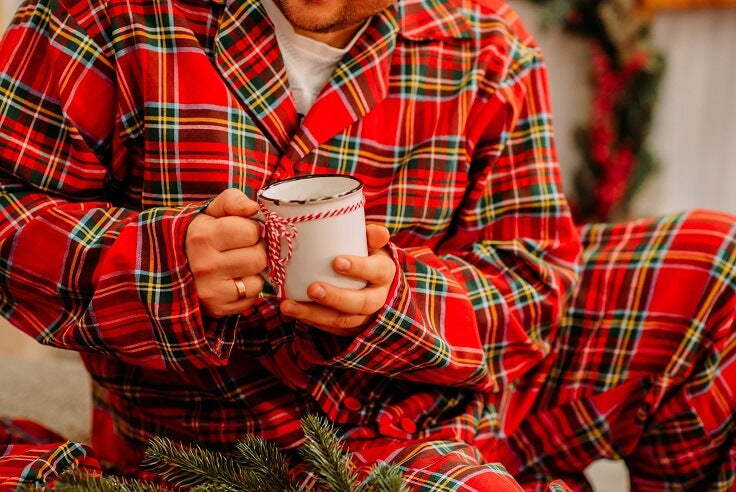
You'd be forgiven for thinking matching family Christmas pajamas have been around since Victorian times, they feel that traditional. The reality? This beloved holiday ritual is astonishingly recent, and its rapid spread tells us something fascinating about how traditions are actually made in the modern age.
The Pre-History: When Coordinated Sleepwear First Appeared
The seeds of matching family pajamas trace back to the "mommy-and-me" fashion trend of the 1930s and 1940s. These weren't Christmas-specific, but they established the idea that coordinated clothing between parent and child could be sweet rather than strange.
Through the mid-20th century, matching pajamas remained rare and mostly limited to children's sleepwear sets marketed for siblings. Holiday-themed sleepwear existed, flannel nightgowns with winter patterns, children's pajamas with Santa prints, but the concept of the entire family deliberately coordinating their Christmas Eve sleepwear simply wasn't part of mainstream American culture.
Even into the 1990s, most families approached Christmas pajamas (if at all) as individual purchases. You might have gotten new pajamas on Christmas Eve as a child, but your siblings weren't necessarily wearing the same pattern, and your parents certainly weren't joining in.
The 2000s: The Quiet Beginning of Something New
The tradition as we know it today began percolating in the early-to-mid 2000s, driven initially by specialty retailers and catalogs targeting affluent families. Companies like Hanna Andersson began offering family sets of holiday sleepwear, positioning them as a premium product for families who wanted to create special traditions.
This early adoption was limited to a specific demographic; families with disposable income who were already invested in creating picture-perfect holiday memories. It was aspirational rather than mainstream.
The tradition also gained traction among families who opened one gift on Christmas Eve as part of their personal holiday ritual. The "Christmas Eve box" concept, which often included new pajamas to sleep in before the big day, became a gentle framework that made matching sets feel purposeful rather than purely decorative.
The 2010s: When Everything Changed
The explosion happened in the 2010s, and three factors collided to transform matching Christmas pajamas from a niche practice into something that felt universal:
The Instagram Effect
When Instagram launched in 2010 and rapidly gained users throughout the early 2010s, it created a perfect showcase for visually appealing family traditions. Christmas morning photos in matching pajamas became shareable content; instantly recognizable, undeniably wholesome, and algorithmically friendly.
Families weren't just creating private memories anymore; they were sharing aesthetic moments. Matching pajamas photographed beautifully, signaled family togetherness, and required no explanation. The tradition became self-reinforcing: the more families posted these photos, the more other families felt they were missing out on something meaningful.
Fast Fashion Democratization
By the mid-2010s, retailers like Target, Old Navy, Walmart, and H&M began offering affordable matching family pajama sets. What was once a $200+ investment from a specialty retailer could now be accomplished for under $60 for a family of four.
This democratization was crucial. The tradition moved from aspirational to accessible, from something you admired in other people's Christmas cards to something you could actually do this year.
The "Elf on the Shelf" Model
The runaway success of "The Elf on the Shelf" (published in 2005, but achieving mainstream saturation by the early 2010s) demonstrated that new Christmas traditions could be manufactured and adopted widely within a single generation. It normalized the idea that traditions didn't need to be ancient to be meaningful.
Matching pajamas followed a similar trajectory; marketed as a tradition, adopted quickly, and within a few years feeling like something families had always done.
Why This Tradition Stuck (When Others Didn't)
Not every attempted holiday tradition catches on. Matching Christmas pajamas succeeded for specific reasons that reveal what modern families actually want:
It creates predictable joy. In a season that can feel overwhelming, chaotic, and commercially exhausting, matching pajamas offer a simple ritual that reliably delivers warm feelings. There's no stress, no performance, just comfort.
It marks a moment. The tradition typically happens on Christmas Eve, creating a distinct before-and-after in the holiday narrative. You put on the pajamas, you take the photo, the anticipation shifts into gear. It's a threshold ritual, and humans love threshold rituals.
It's genuinely comfortable. Unlike many holiday traditions that require effort or discomfort (uncomfortable dress clothes, elaborate meals, forced small talk), matching pajamas are literally designed for relaxation. The tradition asks you to be cozy together, which aligns perfectly with what most people actually want during the holidays.
It includes everyone equally. There's no hierarchy in matching pajamas; the toddler, the teenager, and the grandparents are all on the same level. In a holiday that often emphasizes giving and receiving unequally, this small moment of sartorial democracy matters.
The Pandemic Acceleration
If the 2010s made matching Christmas pajamas mainstream, 2020 made them essential for many families. During pandemic lockdowns and social distancing, the tradition became a way to mark normalcy and create holiday magic in an abnormal year.
Sales of matching family sleepwear spiked dramatically in late 2020 and remained elevated through 2021 and 2022. Families who had never participated before suddenly saw the appeal of a tradition that was home-based, photograph-friendly, and required no outside participation.
The pandemic also shifted how we think about sleepwear generally. With more time spent at home, pajamas became daily wear rather than just bedtime clothing. Quality, comfort, and appearance suddenly mattered more. The matching Christmas set became not just a photo op but a genuinely worn garment.
What This History Tells Us About Modern Traditions
The history of Christmas pajamas reveals how traditions actually form in the 21st century: they're rarely ancient, they spread through visual media, they become accessible through affordable retail, and they succeed when they meet genuine emotional needs.
This isn't a story about authenticity versus commercialism. It's about how families create meaning in real time, using the tools and products available to them. Matching Christmas pajamas aren't sacred because they're old, they're meaningful because they work. They create a moment of togetherness, they're comfortable, they photograph well, and they feel good.
The tradition will likely continue evolving. We're already seeing expansions to include pets, variations for extended families gathering remotely, and growing emphasis on sustainable materials as environmental consciousness increases.
But the core appeal, putting on cozy sleepwear together and marking the transition into Christmas magic. that's likely here to stay.
Frequently Asked Questions
Q: When did matching Christmas pajamas become popular?
A: The tradition gained mainstream popularity in the 2010s, driven by social media (particularly Instagram), affordable retail options from stores like Target and Old Navy, and the broader normalization of "new" traditions. While specialty retailers offered family sets as early as the 2000s, it became a widespread practice around 2012-2015.
Q: What is the Christmas Eve pajama tradition?
A: The Christmas Eve pajama tradition involves families opening new pajamas (often matching sets) on Christmas Eve night to wear to bed and on Christmas morning. It creates a special transition moment between Christmas Eve and Christmas Day, and provides a cozy uniform for family photos on Christmas morning.
Q: Why do families wear matching pajamas on Christmas?
A: Families wear matching Christmas pajamas because the tradition creates a sense of togetherness, marks the special transition into Christmas, photographs beautifully for memories, and provides genuine comfort during a potentially stressful holiday. It's a simple ritual that reliably delivers warm feelings without requiring elaborate effort.
Q: Are matching Christmas pajamas only an American tradition?
A: While matching Christmas pajamas are most popular in the United States, the tradition has spread to Canada, the UK, and Australia, particularly through social media influence and international retailers. The practice is newest in the UK and Australia, having gained traction there primarily in the late 2010s and early 2020s.
If you're ready to start or continue this surprisingly young tradition, our Christmas sleepwear collection features coordinated family sets in soft, breathable fabrics designed for actual sleep, not just photos. though they'll look beautiful in those, too.