



The Throw Pillow Materials That Actually Last: What Holds Up After Years on Your Bed
You buy throw pillows that look perfect in the store. Six months later, they're lumpy, faded, or flattened into sad pancakes that offer zero support when you're reading in bed or need something to prop yourself up during those nights when lying flat just doesn't work.
The problem isn't you. It's that most throw pillow buying decisions are made on aesthetics and initial touch; not on how materials actually perform after months of being leaned against, hugged, bunched up, washed, and used as impromptu neck support during restless nights.
If you use throw pillows on your bed (not just for decoration, but as part of your actual sleep environment), the material matters more than you think. The wrong combination of cover and fill will cost you money and comfort. The right one pays for itself by lasting years without losing shape or function.
Why Throw Pillow Durability Matters for Sleep Quality
Decorative pillows aren't just aesthetic, many of us use them functionally at bedtime. For reading before sleep, for elevation when congested, for lumbar support when sitting up in bed, or as extra cushioning for side sleepers who like something to hug or tuck between their knees.
When these pillows lose their structural integrity, they stop serving these purposes. You adjust them more often, you get less comfortable, and that friction with your sleep environment adds up. A pillow that's lost its loft can't support your neck properly. A cover that's become scratchy after washing disrupts comfort right when you're trying to wind down.
The materials that look luxurious in photographs often fail first. And the materials that last longest are rarely the ones stores push hardest.
Cover Materials Ranked by Longevity
Linen: The Unexpected Durability Champion
Pure linen outlasts almost everything else. It gets softer with washing (not rougher), resists pilling, and its natural fibers have a tensile strength that synthetic blends can't match. Quality linen will still look presentable after five years of regular use and dozens of washes.
The catch: linen wrinkles easily, which bothers some people aesthetically. But if you're prioritizing durability over crisp appearance, it's unmatched. It's also naturally temperature-regulating, relevant if you tend to get warm during the night and these pillows end up against your skin.
Expected lifespan: 5-7 years of regular use
Cotton-Linen Blends: The Practical Middle Ground
A 50/50 or 60/40 cotton-linen blend gives you most of linen's durability with less wrinkling. These blends hold dye better than pure linen (important if you care about color not fading to pale versions of their original selves), and they're typically more affordable.
Look for blends with at least 40% linen content. Anything less and you're essentially buying cotton with linen marketing.
Expected lifespan: 4-6 years
High-Thread-Count Cotton: Good, Not Great
Cotton is the default throw pillow material for good reason, it's affordable, washable, and available everywhere. But not all cotton performs the same over time.
High-thread-count cotton (300+) resists tearing and holds up better to friction. Standard cotton (180-250 thread count) shows wear patterns quickly, especially along seams and corners where pressure concentrates when you're leaning against them.
Cotton's weakness is color fastness. Even quality cotton fades with repeated washing, especially darker colors. If you're investing in pillows for your sleep space, expect them to look noticeably lighter after two years.
Expected lifespan: 3-4 years for high thread count, 1-2 years for standard
Velvet: Beautiful, Fragile, Not Worth It for Daily Use
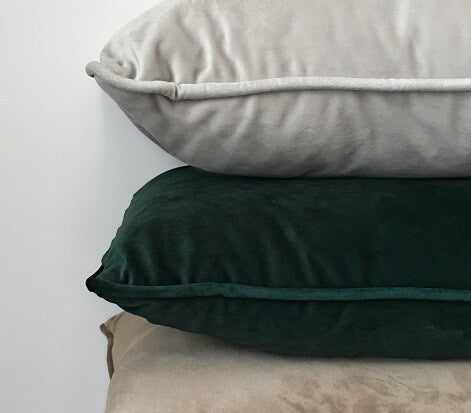
Velvet crush-marks permanently after repeated pressure. That gorgeous texture you loved in the store? It'll be flattened and patchy within months if you're actually using these pillows. The pile also collects dust and requires specialized cleaning.
If you're someone who sleeps hot, velvet against your skin during bedtime reading is uncomfortable. It traps heat and doesn't breathe.
Expected lifespan: 1-2 years before significant visible wear
Performance Fabrics: Variable Quality
"Performance" or "outdoor" fabrics (often polyester-based with water-resistant treatments) are marketed as durable, and some are. But durability doesn't always mean comfort for sleep-adjacent use.
These fabrics often have a slight plastic feel that becomes more noticeable over time. They don't regulate temperature well. And while they resist stains, they can develop a persistent odor that's hard to wash out because the water-resistant treatment prevents deep cleaning.
Where they excel: homes with pets or kids where spills are frequent. Where they fall short: providing the soft, breathable comfort most people want in their sleep environment.
Expected lifespan: 3-5 years structurally, but comfort degrades faster
Fill Materials: Where Most Pillows Fail
The cover gets attention, but fill determines whether your pillow maintains its shape and support over time. This is where most throw pillows fail catastrophically.
Polyester Fiber Fill: The Standard That Disappoints
This is what most affordable throw pillows use. It's light, hypoallergenic, and compresses easily for shipping. It's also the first to flatten.
Standard polyester fill loses 30-40% of its loft within the first year of regular use. Those pillows that felt plump in the store? They'll be sad and deflated before the seasons change twice. You can fluff them, but the fibers have permanently compressed.
Expected lifespan: 1-2 years before noticeable flattening
High-Resilience Polyester (HRP): Actually Worth Considering
Not all polyester is created equal. High-resilience or "virgin polyester" fiber fill uses better-quality fibers engineered to spring back after compression. It costs more, but it can maintain reasonable loft for 3-4 years.
The problem is identification. Most product descriptions just say "polyester fill" without specifying quality grade. Look for terms like "high-loft," "virgin polyester," or "resilient fiber fill."
Expected lifespan: 3-4 years
Feather and Down: High Maintenance, Mixed Results
Down pillows are luxurious, but they require care that most people don't give them. They need regular fluffing, occasional professional cleaning, and they're vulnerable to moisture (relevant if you live in humid climates or sweat during sleep).
Down also migrates. You'll find feathers poking through covers over time, especially at seams. And if you have allergies, down might be problematic even though your throw pillows aren't primary sleep pillows, allergens accumulate.
When well-maintained, down can last 5+ years. In typical use without special care, expect 2-3 years before significant loft loss.
Expected lifespan: 2-3 years with standard care, 5+ with diligent maintenance
Memory Foam or Shredded Foam: The Dark Horse
Shredded memory foam or foam chunks as throw pillow fill is less common but performs surprisingly well over time. The foam pieces don't compress the way fiber does. You can redistribute fill by unzipping and shaking, essentially "refreshing" the pillow.
Downsides: heavier than fiber fill, and lower-quality foam can retain odors. But for longevity and maintained support, foam fill often outlasts everything else in its price range.
Expected lifespan: 5-7 years
Buckwheat and Alternative Natural Fills: Niche but Durable
Some throw pillows use buckwheat hulls, kapok, or other natural materials. These are supremely durable (buckwheat can last a decade) and maintain structure beautifully.
They're also noisy, heavy, and have a specific feel that most people either love or hate. They're not for everyone, but if you've tried them and liked them, they're an investment that truly lasts.
Expected lifespan: 8-10 years
The Best Material Combinations for Long-Term Value
If you're investing in throw pillows that will be part of your nightly routine, not just decoration, here's what actually delivers value over multiple years:
Best Overall: Linen or cotton-linen cover with shredded memory foam fill. Durable cover that improves with age, fill that maintains structure. Expect 5+ years of functional use.
Best Budget: High-thread-count cotton with high-resilience polyester fill. Won't last forever, but gives you 3-4 good years at a reasonable price point.
Best Low-Maintenance: Cotton-linen blend with foam fill. Washable cover, fill that doesn't require fluffing or redistribution.
Avoid: Any combination of velvet, faux fur, or chenille covers with standard polyester fill. You're paying for initial aesthetics that disappear quickly. These pillows look tired within months.
What to Look for When Shopping
Since most product descriptions don't give you the detail you need, here's how to evaluate throw pillows for durability:
Weight matters: A throw pillow that feels substantial has better fill. If it's surprisingly light, it's probably low-density polyester that will flatten quickly.
Check the zipper: Pillows with removable, washable covers last longer because you can care for the cover properly without ruining the fill. Hidden zippers are better than exposed ones (less snagging).
Read care instructions: If it says "spot clean only," the cover fabric probably won't hold up to real cleaning. For pillows in your sleep space, you want machine-washable covers.
Look for fill weight specifications: If listed, fill weight above 16 oz for a standard throw pillow indicates better density and resilience.
Avoid phrase: If the description says "for decorative use only," believe it. These aren't built for actual function.
Frequently Asked Questions
Q: How often should I replace throw pillows on my bed?
A: It depends on use and material, but quality pillows with durable fill should last 3-5 years minimum. If your pillows have lost their shape, won't fluff back up, or have developed permanent compression marks, they're done. Trying to use degraded pillows for support affects your comfort and potentially your sleep posture.
Q: Can I refresh flattened throw pillows, or do I need to replace them?
A: With fiber-filled pillows, once they've compressed significantly, fluffing only provides temporary improvement. Foam-filled or down pillows can often be refreshed, foam by redistributing fill (if the cover unzips) and down by professional cleaning and re-fluffing. But standard polyester fiber fill loses its resilience permanently after 1-2 years of compression.
Q: Are expensive throw pillows actually worth it for sleep quality?
A: If you use throw pillows functionally in your sleep routine; for reading, elevation, or support, then yes, quality materials deliver better long-term value. A $60 pillow that lasts five years costs less per year than a $20 pillow you replace annually. More importantly, pillows that maintain their structure provide consistent support, which matters when they're part of your nightly comfort equation.
Q: What's the best throw pillow material if I sleep hot?
A: Linen or cotton-linen blends are most breathable. Avoid velvet, fleece, or synthetic performance fabrics if temperature regulation matters to you. For fill, avoid dense memory foam, opt for down or high-loft polyester which allows more air circulation.
If you're ready to invest in throw pillows that will actually last beyond a few months of real use, Sandman's Shop's throw pillow collection focuses on durable material combinations built for everyday comfort, not just showroom appeal.