


What People Say About Throw Pillow Materials at First, And What They're Saying Six Months Later
There's a moment when you first bring throw pillows home; they're plump, soft, the fabric practically glows. You arrange them on the couch, step back, and think: perfect.
Then life happens. Six months of actual use. Bodies leaning against them during movie nights. Sunlight streaming through the window. The dog claiming one as his own. Hands reaching for them, moving them, tossing them aside.
That's when the truth about throw pillow materials reveals itself.
Most throw pillow reviews are written within days of unboxing, when everything still has that new-fabric smell and nothing's been tested. But the best throw pillow material isn't about first impressions, it's about what's still holding up half a year later when the novelty has worn off and only performance matters.
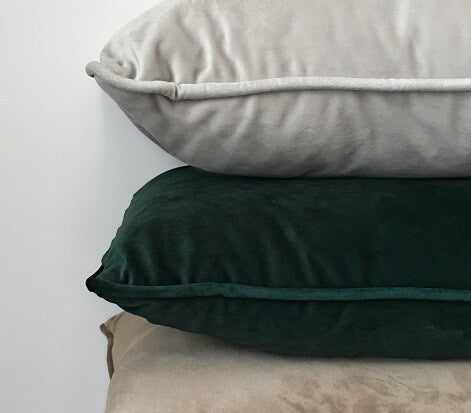
Velvet: The Six-Month Personality Change
What people say at first: "So luxurious! The depth of color is incredible. Feels expensive."
What they're saying six months later: It depends entirely on which direction you're stroking it.
Velvet throw pillows create devoted fans and frustrated returners, and the split happens around the three-month mark. The fabric's signature pile, those tiny fibers standing upright, starts developing what owners call "traffic patterns." Every time someone leans against a velvet pillow, the pile gets pushed in that direction. Over time, you'll see lighter and darker patches where the velvet nap runs different ways.
Some people find this patina charming, like a well-worn leather jacket. Others find it maddening, especially in formal living rooms where they want things to look pristine.
The reality: High-quality velvet (usually cotton or silk-blend) bounces back better than synthetic polyester velvet. You can brush the pile back into alignment with your hand or a soft brush, but it requires regular maintenance. Velvet pillows in high-traffic seating areas will never maintain that showroom appearance without constant attention.
Velvet's other six-month truth: It's a dust magnet. That plush surface catches and holds onto pet hair, lint, and dust particles more stubbornly than smooth fabrics. If someone in your home has allergies, this matters more than the initial luxury feel.
## Linen: The Fabric That Surrenders Immediately (And That's Fine)
What people say at first: "It's wrinkled. Should I return it? Is this normal?"
What they're saying six months later: "I actually love how lived-in it looks now."
Linen creates more first-week anxiety than any other throw pillow material. It arrives creased, wrinkles the moment you touch it, and looks nothing like the crisp cotton options sitting next to it.
But linen owners who make it past the initial adjustment period report the highest long-term satisfaction. The fabric softens beautifully with use, not in a worn-out way, but in a way that feels increasingly comfortable. That rumpled texture that seemed like a defect at first starts reading as intentional, relaxed, and casually elegant.
The six-month reality: Linen doesn't fight you. It doesn't pill, doesn't develop shiny worn spots, and doesn't fade dramatically in sunlight (though colors do mellow). If you spill something on it, you can usually wash it without panic. The weave is strong enough that it doesn't snag easily.
The trade-off is that linen will never look formal or crisp. If your aesthetic requires sharp edges and perfect presentation, linen's casual drape will frustrate you long-term. But if you want throw pillows that actually feel approachable, that people don't hesitate to use, linen delivers six months in exactly what it promised on day one: comfortable imperfection.
Cotton: The People-Pleaser That Shows Its Age
What people say at first: "Soft, washable, affordable. Everything I needed."
What they're saying six months later: "Why does it look faded already?"
Cotton throw pillows are the default choice for good reason, they're soft, breathable, easy to care for, and available everywhere. But cotton's biggest strength (its accessibility) becomes its weakness over time: not all cotton is created equal, and most people can't tell the difference until months later.
Basic cotton pillow covers, especially those in darker colors, start showing wear around the four-month mark. The fabric develops a slightly fuzzy surface as fibers break. Colors fade, particularly if the pillows sit in direct sunlight. Cheaper cotton blends (often mixed with polyester to cut costs) can develop pilling in high-friction areas.
The six-month reality check: Thread count and weave matter enormously for cotton longevity, but these details are rarely mentioned in product descriptions. Tightly woven cotton with a thread count above 200 holds up significantly better than loosely woven alternatives. Cotton sateen finishes maintain their sheen longer than plain weaves. And 100% cotton outperforms cotton-poly blends for maintaining texture and color.
Here's what long-term cotton owners learn: Washing matters as much as the material itself. Cotton can handle regular washing, but each cycle fades colors slightly and breaks down fibers. The pillows that still look good at six months usually belong to people who spot-clean rather than throwing covers in the wash after every spill.
Faux Suede and Microfiber: The Surprising Overperformer
What people say at first: "It's synthetic. Does that make it cheap?"
What they're saying six months later: "This is the only pillow cover that still looks new."
Faux suede and microfiber throw pillows suffer from a perception problem. They sound less luxurious than velvet, less natural than linen, less classic than cotton. But when we're talking about the best throw pillow material for durability, they're consistently in the conversation six months later.
High-quality microfiber (look for terms like "ultra-suede" or "microsuede") resists the issues that plague other materials. It doesn't pill easily. It repels liquid spills rather than absorbing them immediately. Pet hair brushes off with minimal effort. The color stays true even in sunny rooms.
The six-month reality: These materials feel different than they did at first, not worse, just broken in. That slight stiffness when new relaxes into a softer hand. The fabric develops a subtle patina that reads as expensive rather than worn.
The trade-off is breathability. Synthetic materials don't allow air circulation the way natural fibers do. This doesn't matter much for decorative throw pillows, but if someone tends to sleep on the couch using throw pillows as support, they'll notice the difference. These materials trap heat rather than wicking it away.
Silk and Velvet Blends: Beautiful Until They're Not
What people say at first: "This is the most beautiful thing in my living room."
What they're saying six months later: "I'm afraid to actually use it now."
Silk, silk-blend velvet, and other luxury materials create a specific kind of long-term relationship with their owners: protective anxiety. These pillows often look as stunning at six months as they did on day one, but that's because people stop treating them like functional throw pillows.
They get moved to the bedroom where they're less exposed. They're fluffed obsessively. They're kept away from pets, kids, and anyone eating snacks on the couch. The pillows haven't failed, the owners have simply learned these materials require maintenance they weren't expecting.
The reality: Luxury materials hold up fine under gentle use, but "gentle use" isn't how most throw pillows live. Water spots show on silk. Oils from hands and hair leave marks on light-colored silk-blend velvets. Professional cleaning is often required rather than at-home washing.
If you want throw pillows you can admire more than use, these materials deliver long-term beauty. If you want throw pillows that work hard in a lived-in space, they're probably more stress than they're worth.
What Actually Defines "Best" After Six Months of Real Life
The best throw pillow material isn't a single answer, it's the right match between your expectations and your actual life.
If your throw pillows live in a formal living room that's more displayed than used, velvet and silk maintain their visual impact beautifully. If they're working pillows on a family couch, linen and quality microfiber forgive daily wear without looking shabby. If you have pets or kids, anything requiring dry cleaning or special care will eventually frustrate you.
The pattern we see consistently: People who are still happy with their throw pillows six months later either chose materials that matched their lifestyle, or they adjusted their expectations to match the material's natural behavior. Disappointment comes from the gap between those two things.
Here's the question that matters more than any material comparison: Do you want throw pillows that maintain a specific look, or do you want throw pillows that age gracefully? Those are different goals requiring different materials.
Frequently Asked Questions
Q: What is the most durable material for throw pillows?
A: Tightly woven cotton, linen, and high-quality microfiber consistently rank highest for durability over six months of regular use. They resist pilling, maintain color better than velvet or silk blends, and handle washing without deteriorating. Durability matters most in high-traffic areas where pillows get daily contact.
Q: Why do velvet throw pillows look different after a few months?
A: Velvet's pile (the raised fibers on the surface) gets pushed in different directions with use, creating lighter and darker patches where the nap changes direction. This is normal for velvet and happens faster with synthetic velvet than natural fiber versions. You can brush the pile back into alignment, but it requires regular maintenance to maintain a uniform appearance.
Q: Can you wash throw pillow covers without ruining them?
A: It depends entirely on the material. Cotton and linen handle washing well, though colors will fade gradually over time. Velvet and microfiber usually require gentler care or spot-cleaning. Always check care labels, but in general, the more "luxury" the material feels, the less it tolerates regular machine washing. Most long-term wear isn't from the washing itself but from the frequency of washing.
Q: Do throw pillow materials affect sleep quality if used for napping?
A: Yes, though throw pillows aren't designed for sleep support. Natural materials like cotton and linen breathe better and regulate temperature, making them more comfortable for extended contact with skin. Synthetic materials like polyester and microfiber trap heat and don't wick moisture. If you regularly nap on the couch using throw pillows, breathability matters more than aesthetics.
When you're ready to invest in throw pillows that are designed to last beyond the honeymoon period, Sandman's Shop's collection focuses on materials chosen for real-life durability, the kind that still looks intentional six months in, not worn out. We stock the throw pillows we'd actually want to live with long-term.